
In development and validation
Dynamic carbon signals at the soil-water interface.
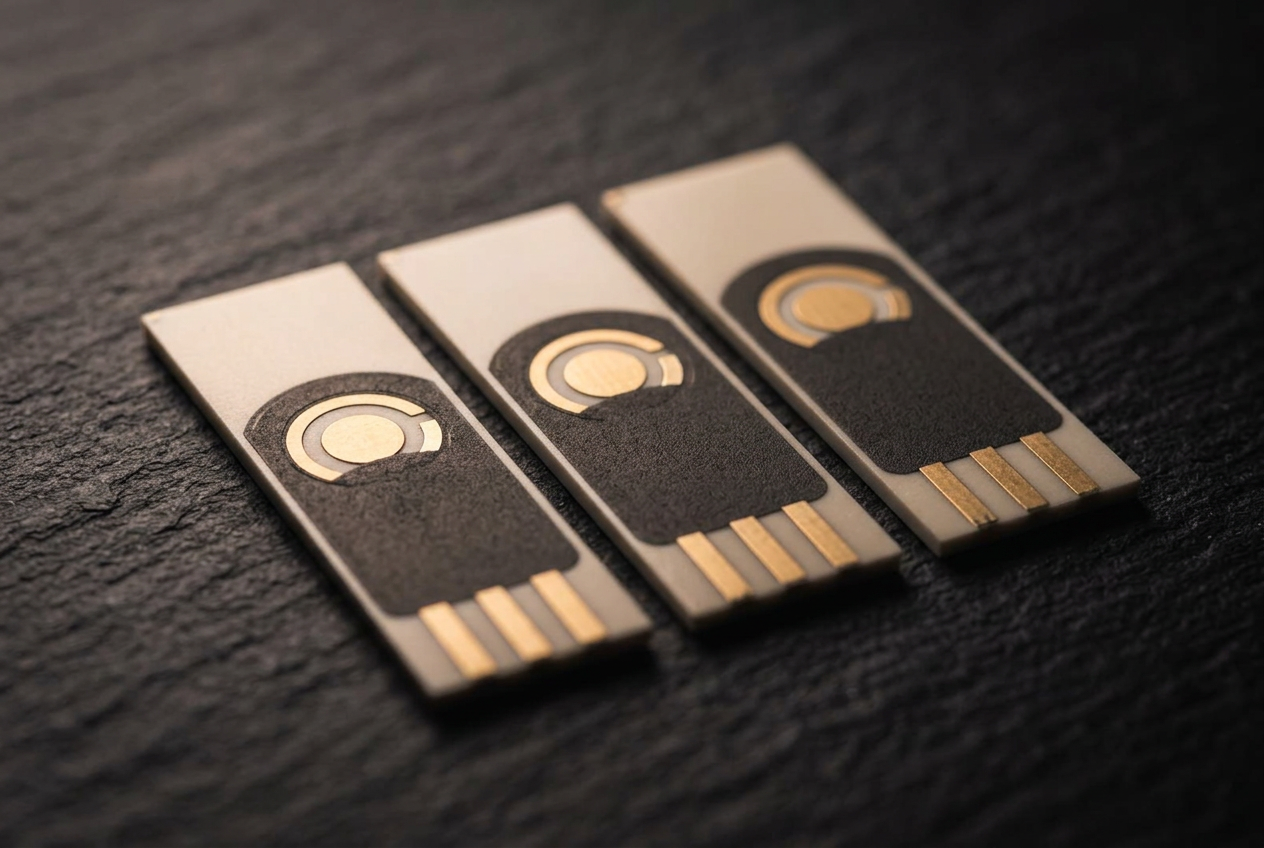
An engineered electrochemical sensor detects a carbon signal from the moisture around soil particles, the environment where roots, microbes and nutrients interact.
Technology
The same core science behind continuous glucose monitoring, re-engineered for the soil environment.
The technology
SensorC leverages next-generation electrochemical technology and calibration science to translate soil biogeochemistry into real-time carbon and nutrient concentrations at the specific compound level.
The technology works by delivering a tiny voltage to the soil interface and measuring the responding electrical current. The signal is instant and allows repeated observations on a compact sensor-on-a-chip design.

Chip scale
COMPACT, INTEGRATED AND SCALABLE
Seconds
From reaction to reading
In-situ
Weather-proof, stays in the ground
How it works
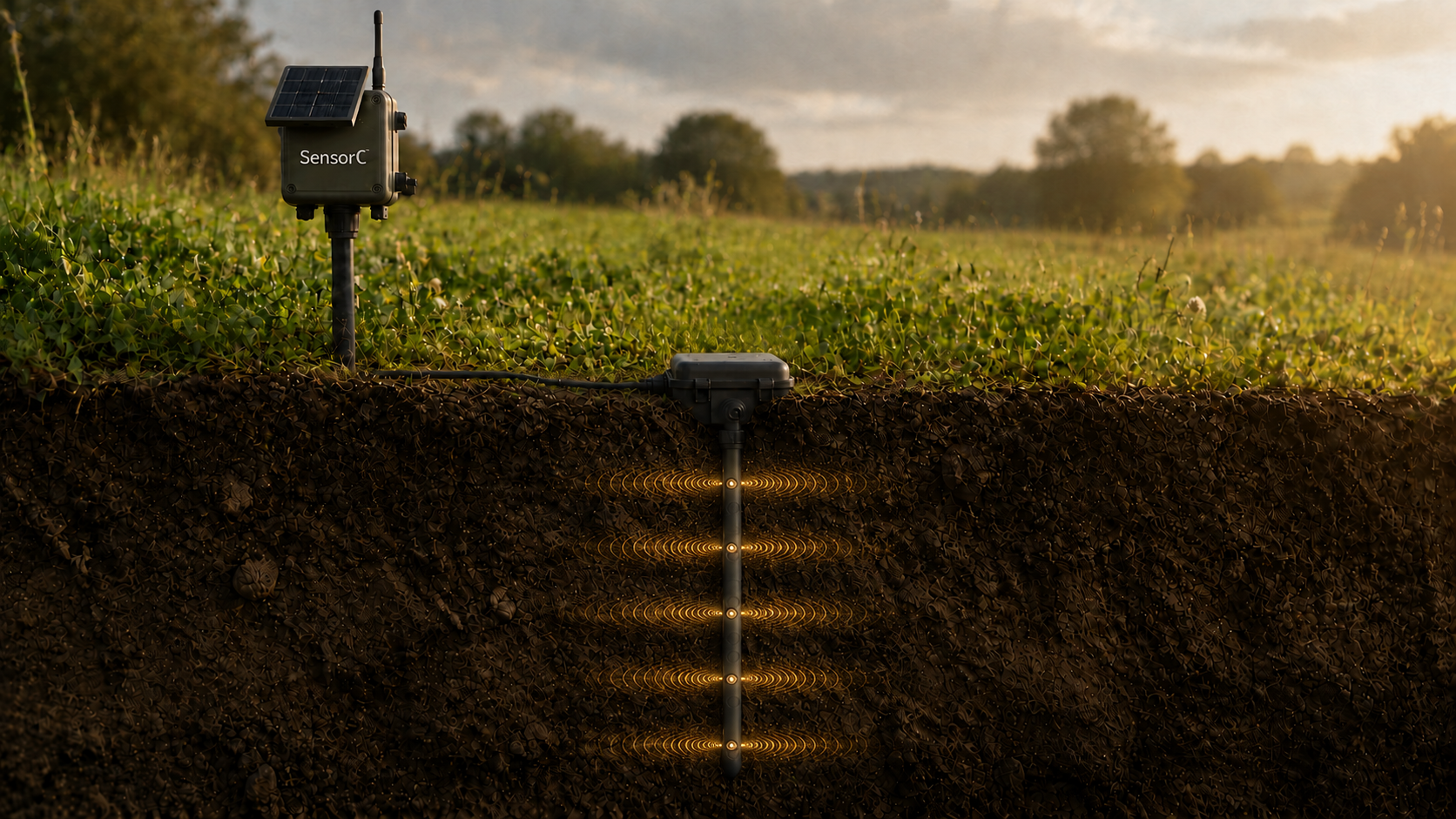
A tiny voltage is delivered to the soil-water interface.
Target compounds react and return an electrical current.
Calibration science converts current into concentration.
Readings stream continuously to connected data systems.
Platform concept
The same core electrochemical approach can be adapted to different chemical targets, installed at different depths, housed for different environments and scaled from single fields to continental monitoring networks.
The value
Electrochemical sensing platforms drastically reduce manufacturing costs and data lead times, allowing a transformational increase in the spatial and temporal resolution of measurement.
Capability roadmap
In development and validation
An engineered electrochemical sensor detects a carbon signal from the moisture around soil particles, the environment where roots, microbes and nutrients interact.
In development and validation
Extending the same sensing approach to mineral nitrogen forms such as nitrate and ammonium, the pools that change fastest between sampling events.
Platform potential
The core electrochemical approach can be adapted to other chemical targets over time. Future analytes are not yet commercially available.